Synopsis
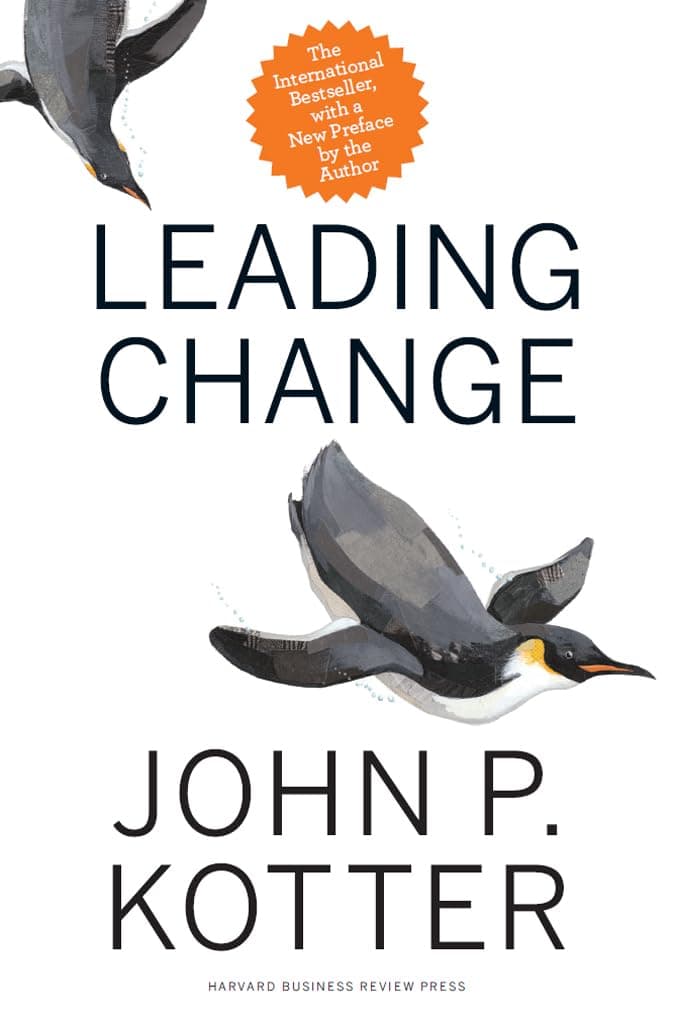
Leading Change is John Kotter's framework for managing large-scale organisational change. He argues that change fails most often because organisations skip steps or confuse management (planning, budgeting, controlling) with leadership (setting direction, aligning people, motivating). His eight-step process—create urgency, build a guiding coalition, form a strategic vision, communicate it, empower action, generate short-term wins, sustain acceleration, institute change—is designed to address the reasons change efforts stall.
The book is grounded in research and case studies. Kotter is clear that skipping steps or going too fast leads to superficial change that doesn't stick. The revised edition adds material on the role of urgency and on creating a culture that can change repeatedly.
Why I Recommend It
Change management is often reduced to communication plans and training. Kotter makes the case that successful change requires a coalition, visible wins, and sustained pressure—and that most failures come from treating change as a project rather than a leadership task. The eight steps give a checklist and a shared language for change initiatives.
Key takeaways:
- Urgency is the starting point: Without it, complacency wins; create a genuine sense that the status quo is not acceptable
- Short-term wins matter: Early victories build momentum and credibility; plan for them
- Leadership and management are both needed: Management keeps the train running; leadership changes where it's going
Practical application: I've used the framework when planning org changes, transformations, and adoption of new ways of working. The emphasis on a guiding coalition (not just the CEO) and on communicating the vision repeatedly is practical. The "why change fails" section helps diagnose struggling initiatives.
The standard reference for leading organisational change.
Favourite Quote
"Behaviour change happens mostly by speaking to people's feelings. This is true even in organisations that are very focused on analysis and quantitative measurement."
Kotter reminds us that change is emotional. Data and logic are necessary but not sufficient; people need to feel the need for change and the possibility of something better.