Synopsis
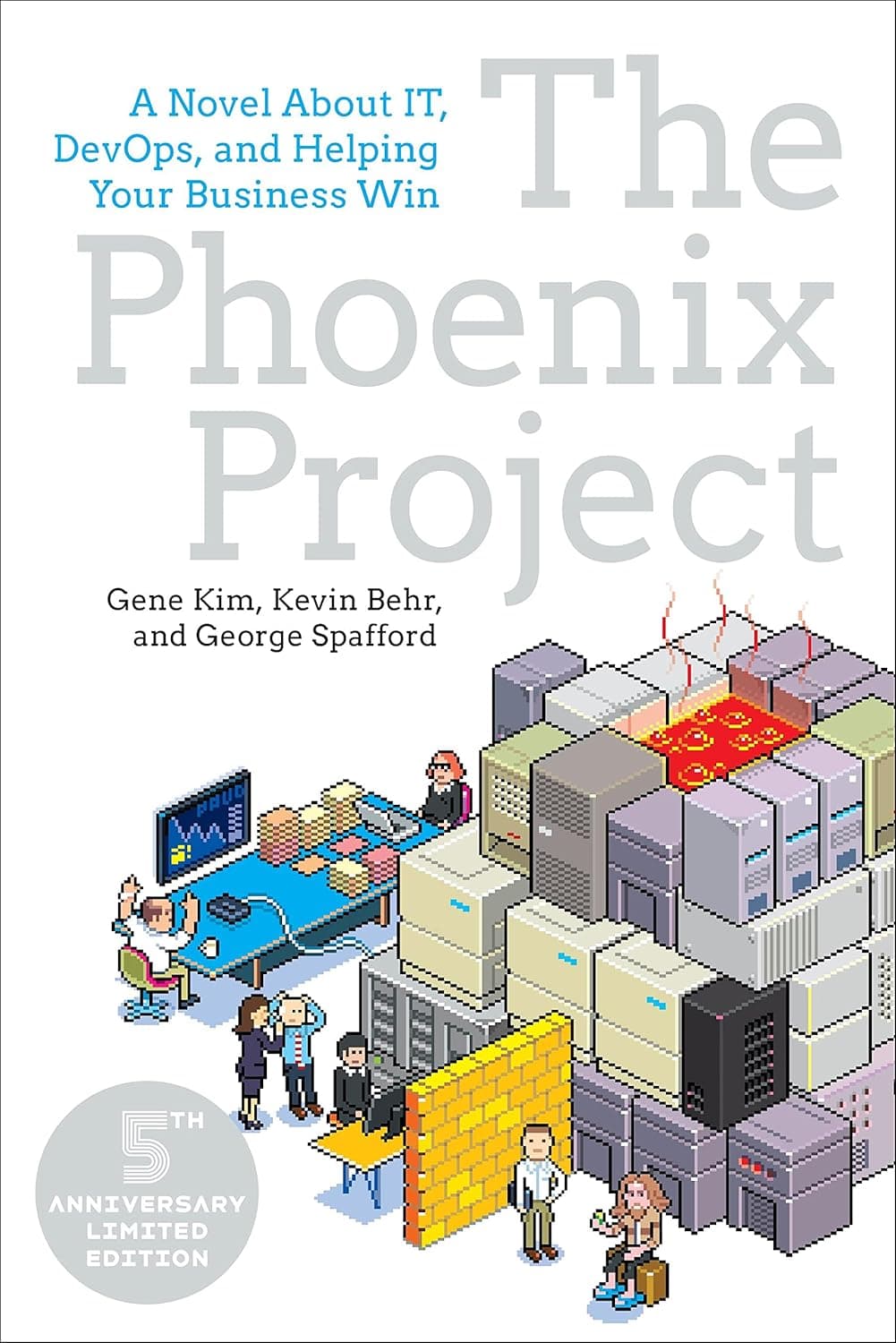
The Phoenix Project is a novel about IT, DevOps, and helping your business win. Through the eyes of Bill, an overwhelmed VP of IT who is suddenly tasked with rescuing a critical business project, the book brings to life the challenges of traditional IT organisations—unplanned work, siloed teams, and firefighting—and shows how the principles of DevOps and lean manufacturing can transform delivery.
The story is structured around the "Three Ways": Flow (from Development to Operations), Feedback (from right to left at all stages), and Continual Learning and Experimentation. It makes abstract concepts concrete and memorable through characters and situations that will feel familiar to anyone who has worked in software delivery.
Why I Recommend It
This book is one of the most effective ways to introduce DevOps thinking to leaders and teams who might never pick up a technical manual. Because it's a novel, it meets people where they are: in the chaos of releases, meetings, and conflicting priorities.
Key takeaways:
- Work visible, not invisible: Unplanned work and dependencies need to be made visible before they can be managed
- Limit work in progress: Multitasking and constant context-switching destroy throughput
- Bottlenecks define the system: Optimising anywhere except the constraint doesn't improve overall flow
Practical application: I've recommended it to product and engineering leaders as pre-reading before DevOps or flow initiatives. The shared story gives everyone a common language—"we're having a Phoenix Project moment"—and makes it easier to discuss constraints, batch sizes, and feedback loops without sounding academic.
For engineers, it validates the pain of broken processes and points toward a better way; for executives, it frames IT as a value stream that can be improved, not a cost centre to be cut.
Favourite Quote
"The goal is to make our daily work visible. Not to have a perfect plan, but to have a shared understanding of what we're doing and why."
The book repeatedly shows that visibility and shared understanding—not heroics or blame—are what turn around failing projects. That mindset is as relevant to platform teams and product delivery today as it was when the book was written.