Synopsis
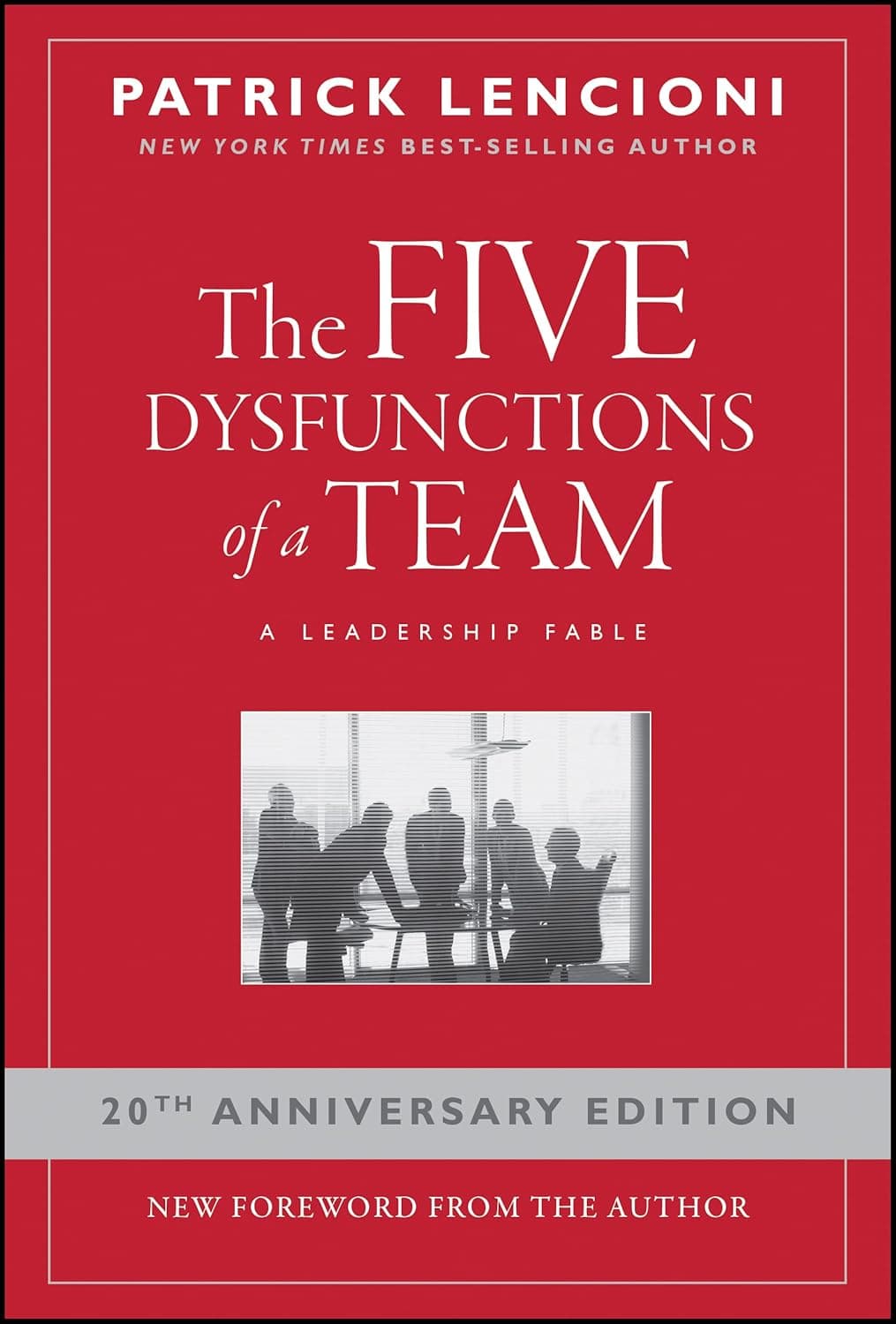
The Five Dysfunctions of a Team is a leadership fable about a struggling executive team and the behaviours that hold them back. Patrick Lencioni layers five dysfunctions in a pyramid: absence of trust, fear of conflict, lack of commitment, avoidance of accountability, and inattention to results. Each layer builds on the one below—you can't have healthy conflict without trust, or accountability without commitment.
The story is followed by a summary of the model and practical suggestions for addressing each dysfunction: exercises for building trust, norms for productive conflict, and ways to make results visible and collective.
Why I Recommend It
Many teams suffer from the same patterns: artificial harmony, ambiguous decisions, and individuals optimising for themselves rather than the team. This book names those patterns and gives a clear sequence for tackling them. The fable format makes it easy to share with a leadership team—"we're like that" becomes a starting point for change.
Key takeaways:
- Trust is the foundation: Without vulnerability and psychological safety, teams avoid the conflict that leads to better decisions
- Conflict is necessary: Disagreement, done well, surfaces the best ideas; artificial agreement hides problems
- Results over ego: The team's outcomes must trump individual status or department goals
Practical application: I've used it in team workshops and offsites—the model gives a shared language for "we need to trust each other more" or "we're not holding each other accountable." The exercises in the back are practical starting points. For new managers or teams in conflict, it's a useful frame.
Pairs well with The Advantage for the organisational level; this one stays focused on the team.
Favourite Quote
"Trust is the foundation of real teamwork. Without it, teamwork is just a collection of individuals."
Lencioni is explicit: you can't skip the foundation. Investing in trust—through vulnerability, consistency, and clarity—is what makes the rest of the pyramid possible.