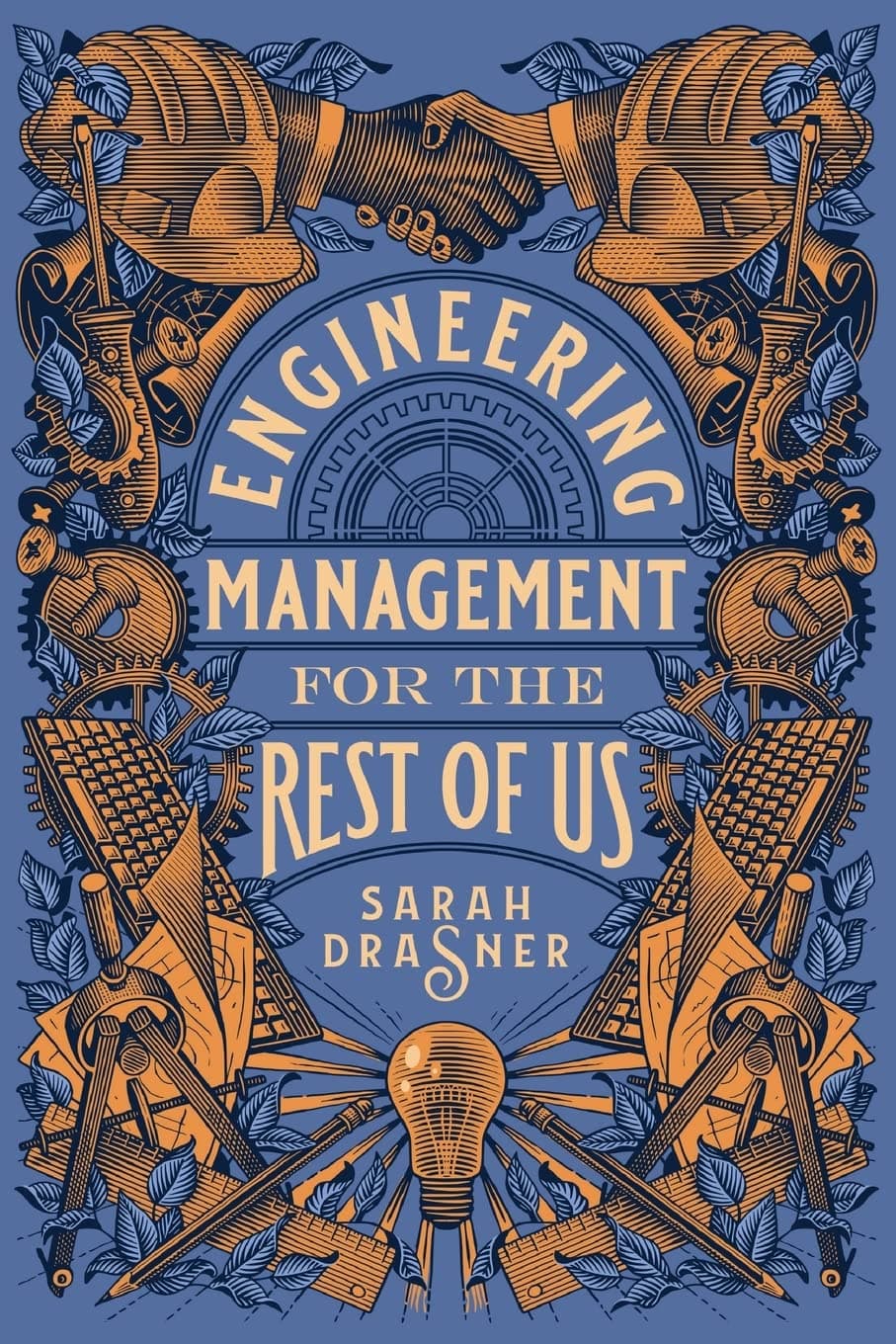
Synopsis
Engineering Management for the Rest of Us is a practical guide for engineers who have become managers—often without formal training—and who want to do it well. Sarah Drasner covers the basics: 1:1s, feedback, delegation, prioritisation, and running meetings, as well as the harder parts: conflict, burnout, inclusion, and managing your own transition from individual contributor to manager.
The book is grounded in her experience as an engineer and then a manager at companies like Microsoft and Netlify. It's concise and actionable, with concrete suggestions for what to do in the first 90 days, how to build trust, and how to balance supporting your team with still contributing technically when it makes sense.
Why I Recommend It
Many engineering managers are promoted for technical skill and then left to figure out the rest. This book meets that reality: it doesn't assume you've had management training, and it doesn't pretend that people management is easy. It gives a clear framework for the behaviours that matter—listening, clarity, follow-through—and why they matter.
Key takeaways:
- Your job is to enable others: Success is your team's success, not your individual output
- 1:1s are for them: Use the time to understand what they need, not to status-report
- You don't have to know everything: Good managers ask questions, delegate, and create safety for learning
Practical application: I've recommended it to new managers and to senior engineers considering the move. The sections on feedback and difficult conversations are especially useful; the book is honest about the emotional labour of management while still being practical. The emphasis on inclusion and psychological safety aligns well with modern team leadership.
A strong first read for anyone stepping into engineering management.
Favourite Quote
"Management is a different job. It's not a promotion from coding—it's a career change."
Drasner is clear that the skills that made you a great engineer are not the same skills that make you a great manager. Accepting that shift—and investing in the new skills—is the first step to doing the job well.