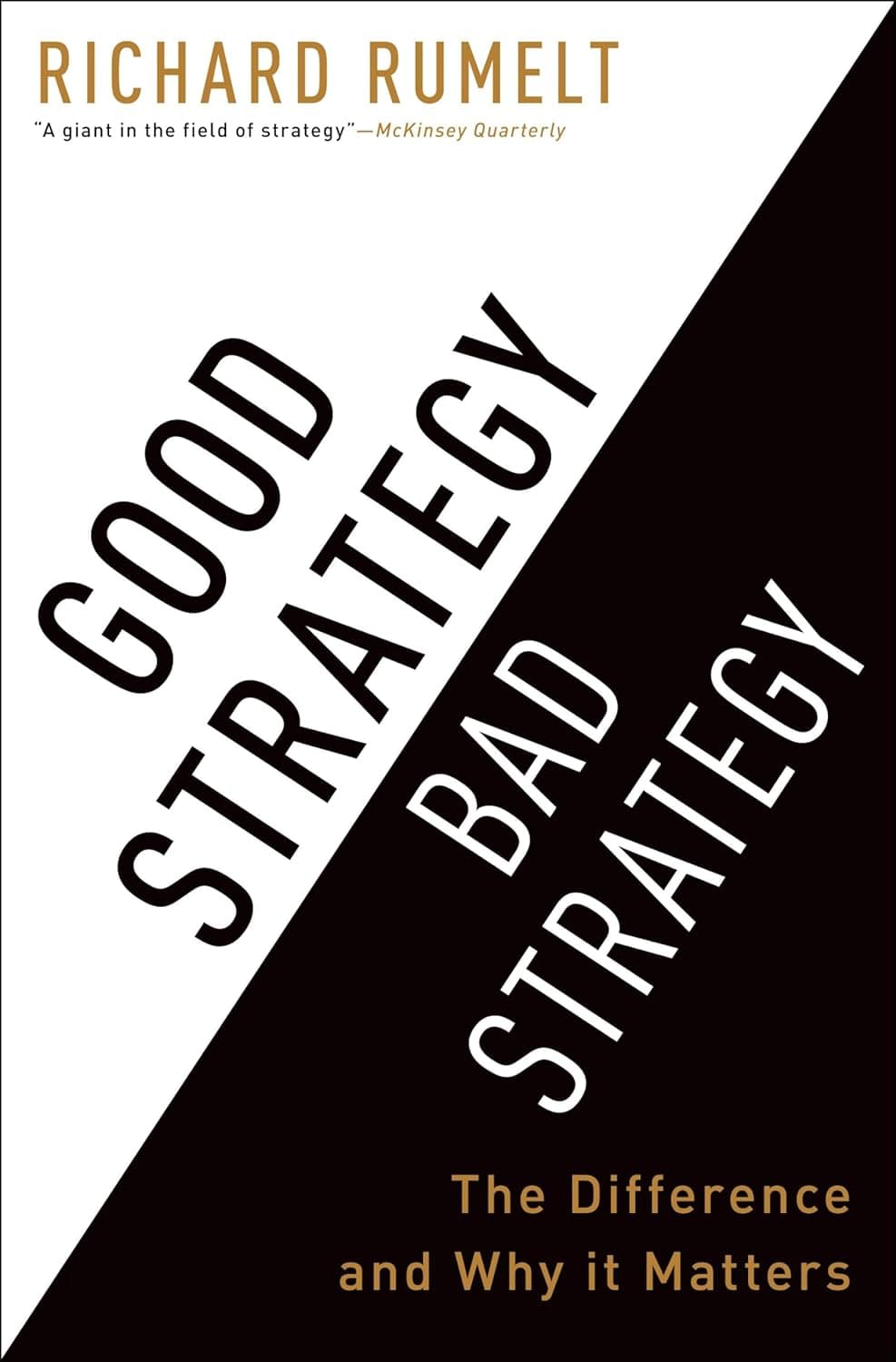
Synopsis
Good Strategy Bad Strategy cuts through the confusion between real strategy and the fluff that often passes for it. Richard Rumelt argues that good strategy has three elements: a diagnosis of the situation (what's going on?), a guiding policy (how we'll respond?), and coherent action (specific steps that work together). Bad strategy, by contrast, is goals without a plan, buzzwords without substance, or a long list of initiatives with no focus.
Rumelt draws on business and military history to show how diagnosis drives good strategy and how "bad strategy"—whether fluff, failure to face the challenge, or mistaking goals for strategy—leads to wasted effort and missed opportunities. The book is sharp and opinionated; it names what's wrong with much corporate strategy and shows what better looks like.
Why I Recommend It
Strategy is one of the most overused and under-understood words in business. This book gives a clear definition and a way to evaluate your own (and others') strategy. The diagnosis–policy–action structure is immediately usable: in planning sessions, board discussions, or when reviewing why an initiative failed. Rumelt's critique of "vision" and "stretch goals" as substitutes for strategy is bracing and useful.
Key takeaways:
- Diagnosis first: You can't design a good response without understanding the situation; most bad strategy skips this
- Strategy is about focus: Coherent action means saying no to many things so a few things get done well
- Identify the crux: Find the pivotal challenge or leverage point; strategy that tries to do everything does nothing
Practical application: I've used it to reframe strategy discussions—"what's our diagnosis?" often reveals that we've been debating actions without agreeing on the problem. The distinction between good and bad strategy helps when reviewing plans or when pushing back on initiatives that are really just wish lists. It pairs well with The Crux, which extends the same thinking into a step-by-step process.
For anyone responsible for or involved in strategy, it's essential reading.
Favourite Quote
"Bad strategy is the active avoidance of the work of strategy. It is the product of not being able to choose, or not being willing to choose."
Rumelt is blunt: bad strategy is often a failure of courage or clarity. Naming that helps—it shifts the conversation from "we need a better plan" to "we need to make hard choices and stick to them."