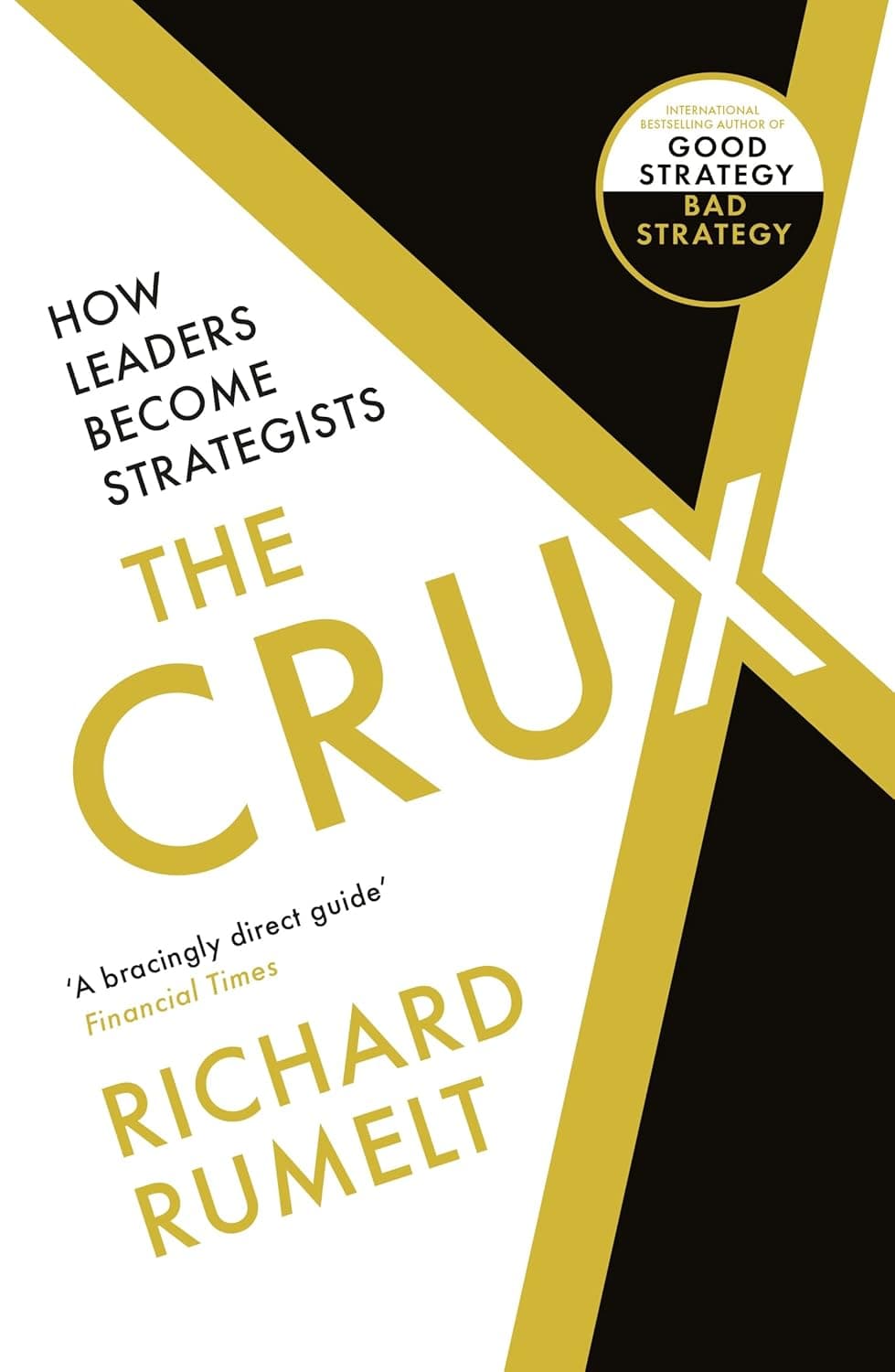
Synopsis
The Crux is Richard Rumelt's guide to strategy as problem-solving. He argues that good strategy identifies the critical challenge—the "crux"—and focuses resources there, rather than spreading effort across goals and initiatives. The book is built around a process: list challenges, identify the crux (the one that unlocks others or that must be solved first), then design a coherent response.
Rumelt draws on cases from business, government, and his own consulting. He's critical of strategy that is just goal-setting or vision statements without a clear diagnosis and a focused action. The tone is direct and practical: strategy is work, not inspiration.
Why I Recommend It
Rumelt's earlier Good Strategy Bad Strategy clarified what strategy is and isn't. The Crux goes further: it's a how-to. The challenge–crux–action structure gives teams a way to do strategy rather than just talk about it. For leaders drowning in priorities, it's a method for deciding what actually matters and what can wait.
Key takeaways:
- Find the crux: The central challenge that, if addressed, makes others easier or unnecessary
- Diagnosis before prescription: Understand the situation before choosing actions
- Coherent action: Strategy is a set of coordinated moves, not a list of initiatives
Practical application: I've used the challenge-listing and crux-finding process in strategy workshops. It forces clarity: what exactly is the problem, and what's the one thing we must get right? The book's emphasis on focus and trade-offs is useful when saying no to good ideas that aren't the crux. For product and engineering leaders doing annual or quarterly strategy, it's a sharp tool.
A practical follow-up to Good Strategy Bad Strategy—strategy as disciplined problem-solving.
Favourite Quote
"Strategy is the craft of figuring out which challenges are critical and then designing a coherent response to them."
Rumelt's definition is spare and useful: strategy isn't goals or vision alone; it's diagnosis plus focused action. The crux is the pivot between the two.