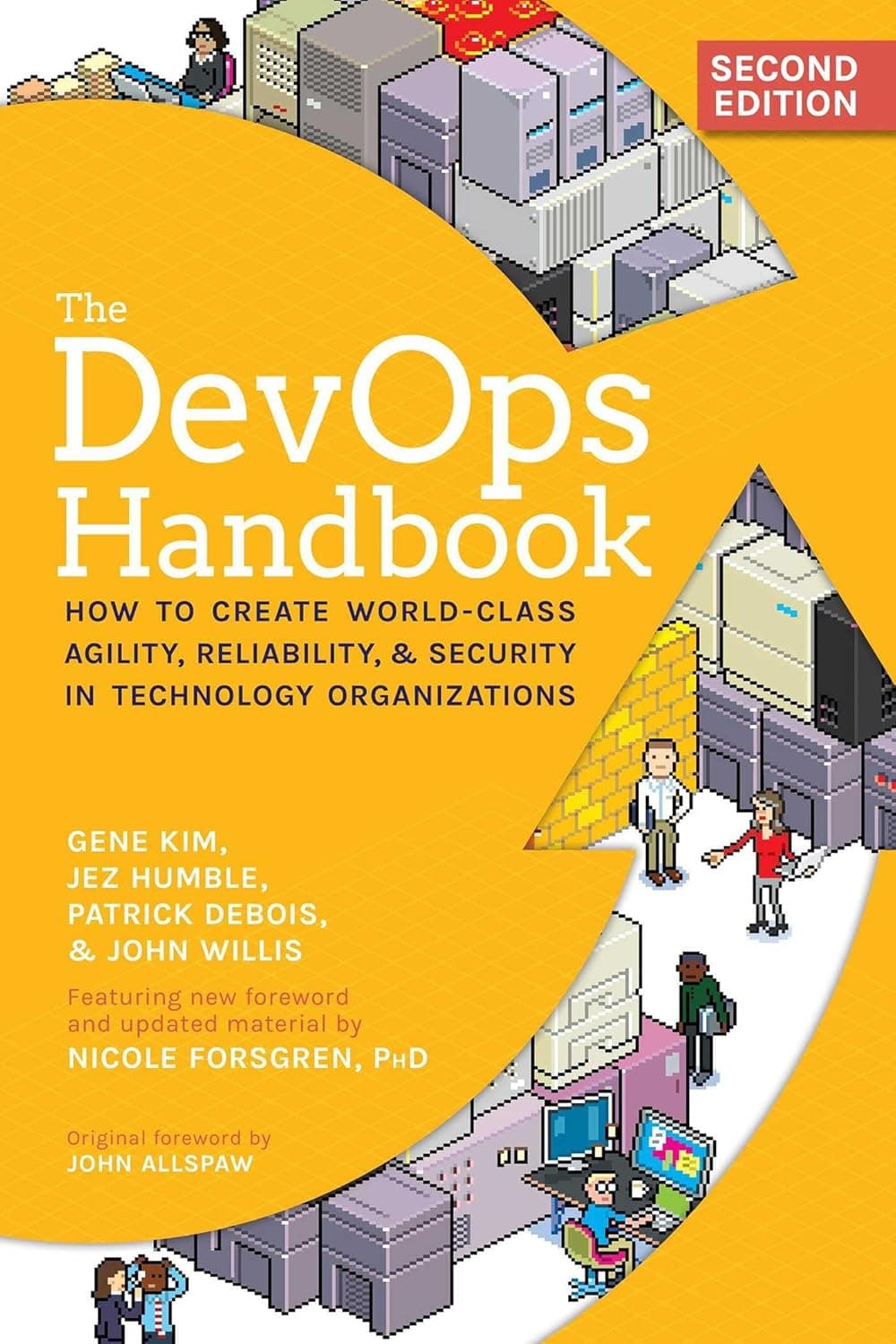
The DevOps Handbook
Gene Kim, Jez Humble, Patrick Debois & John Willis
Synopsis
The DevOps Handbook is a practical guide to achieving the outcomes described in The Phoenix Project: fast flow from development to production, reliability, and a culture of shared responsibility. The authors outline the "Three Ways"—Flow, Feedback, and Continual Learning—and expand them into concrete practices: value streams, deployment pipelines, telemetry, and organisational change.
The book covers technical practices (automation, infrastructure as code, continuous integration and deployment) and the organisational and cultural work required to sustain them. It includes case studies and patterns from organisations that have made the transition, as well as anti-patterns to avoid.
Why I Recommend It
Where The Phoenix Project tells a story, the Handbook is the playbook. It's the right next step for teams that have bought into the "why" and need the "how": how to map value streams, where to start with automation, how to create feedback loops, and how to lead the change without a big-bang rewrite.
Key takeaways:
- Make work visible: Value stream mapping reveals where work stalls and where to improve
- Reduce batch sizes: Small, frequent changes reduce risk and accelerate learning
- Create feedback at every stage: From unit tests to production monitoring, feedback loops enable fast correction
Practical application: I've used it to structure DevOps adoption—picking one value stream, making work visible, then tackling the biggest constraint. The emphasis on culture and organisational design is as important as the technical content; the book makes clear that tooling alone doesn't create DevOps.
For leaders and practitioners building high-performing delivery organisations, it's an essential reference.
Favourite Quote
"The best way to get started is to start. Pick one value stream, make the work visible, and improve one step at a time."
The book resists the urge to prescribe a single path. It gives principles and patterns, then encourages you to begin where you are and iterate—exactly the mindset DevOps demands.